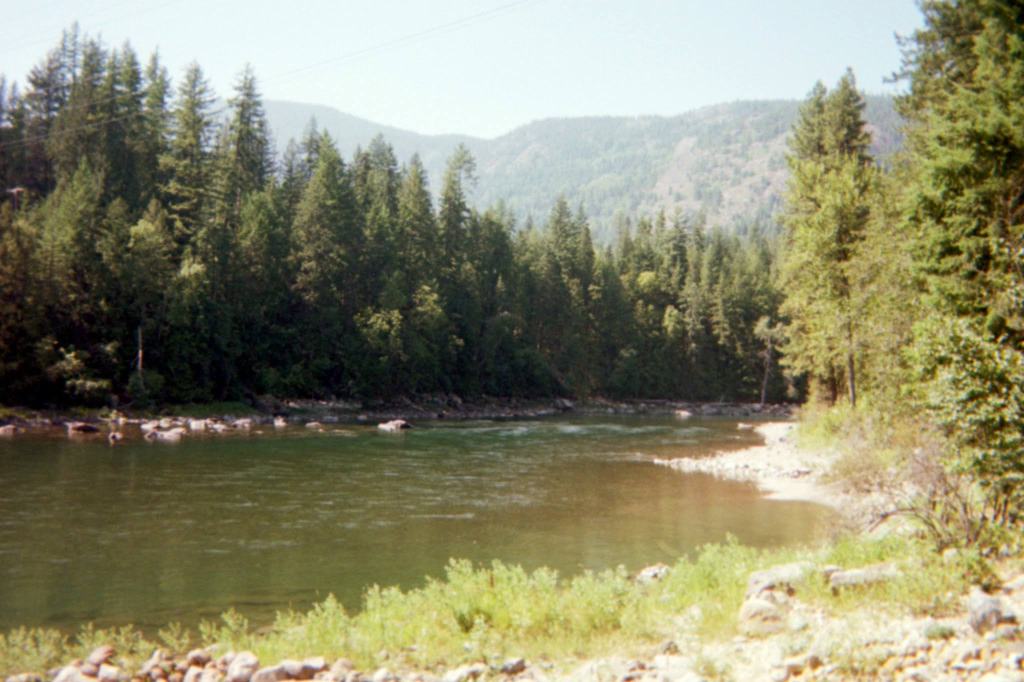
A closer look at the recent USDA decision to revoke the “Roadless Rules” act and how it diverts attention away from the larger policies in place that affect the economic stability of the United States.
By Isabel Chalmers
On June 23, 2025, Secretary of Agriculture Brooke L Rollins stated that “Donald Trump is removing absurd obstacles to common sense management of our natural resources by rescinding the overly restrictive roadless rule”. The 2001 Roadless Rule has been one of the most significant conservation policies implemented to protect public land in the United States from road construction. Road construction can lead to erosion, species loss, pollution, habitat loss, waste and deforestation (USDA, 2025).
The 2025 press release also states that:
“This rule is overly restrictive and poses real harm to millions of acres of our national forests…”
“Rescinding this rule will remove prohibitions on road construction, reconstruction, and timber harvest on nearly 59 million acres of the National Forest System.”
The Secretary of Agriculture noted that the United States is in a ‘timber emergency’ and that this ‘outdated administrative rule’ has been the cause of a “25% decrease in economic development in the forestry sector” in Utah alone (USDA, 2025).
Pointedly, you can bring the U.S-Canada Free Trade Agreement (FTA) into this conversation. Implemented on January 1st, 1988, “with the goal of eliminating all tariffs on trade between the two countries”(Shaw, 2024) and later superseded by the North American Free Trade Agreement (NAFTA) between the U.S., Canada, and Mexico on January 1st, 1994, and then the United States-Mexico-Canada Agreement (USMCA) implemented on July 1st, 2020. Analyst of International Trade and Finance at the Congressional Research Service, Kyla Kitamura, stated that “under USMCA, Canadian softwood lumber that is imported under USMCA rules normally can enter the United States duty-free”(Kitamura & Riddle, 2026). Brownstein writers state that “Canada is the largest exporter of softwood lumber to the United States—the U.S. imports from Canada because domestic production is insufficient to meet demand” and that “…with the imposition of an additional 10% tariff, Canadian softwood lumber will rise to 45.19%… further raising costs for domestic producers that are reliant on foreign inputs (Carl-Yoder et al., 2025). So, the framing of the ‘timber emergency’ as the result of an “outdated” conservation initiative steers away from the reality that recent policy changes play a far greater role than is being acknowledged.
Senior policy advocate at ELPC, Kelly Thayer, argues that reintroducing roads and construction in these forests will do the opposite of what Secretary Rollins and the Trump administration are proposing. She states that the fragile ecosystems will face an increased fire risk, as people and external ignition sources are reintroduced (Thayer, 2025). The loss of protection for nearly 59 million acres of forest will burden the American population, both physically and financially. The forests provide fresh air, stores carbon, protects native flora and fauna, preserves historic landscapes, supports diverse ecosystems, and offers outdoor recreation that benefits rural communities economically. The expansion of road networks, construction and site preparations all carry significant long-term costs for the American taxpayer (Thayer, 2025). As forests lose their natural filtering capabilities for water and air, external filtration systems will have to be installed to ensure safe drinking water and treat emerging pollutants. Secretary Brooke Rollins stated that by rescinding the Roadless Rule Act, the department is entering a new era of sustainability, promoting new forest management strategies to prevent devastating fires (USDA, 2025). The larger picture is being overlooked. Pollution, deforestation, and habitat loss are guaranteed and the justification for economic growth becomes harder to separate from broader trade policies that have already hindered supply chains.
When you look at trade agreements and systems such as these, they are put in place to protect the sustainability of agricultural agreements, national relationships, and the health and renewability of the country. Prof. Barry Appleton states that “if political theatre continues to substitute for structured engagement, North America’s integrated supply chains risk fragmentation along lines of political trust rather than economic efficiency” (Appleton, 2025). In that context, the issue becomes less about a single conservation rule and more about whether short-term political agendas are starting to outweigh long-term economic sustainability.
References:
Appleton, B. (2025). Public Comments on Review of the Agreement Between the United States, Mexico, and Canada (USMCA) (Docket No. USTR–2025–0004) from Prof. Barry Appleton. SSRN Electronic Journal. https://doi.org/10.2139/ssrn.5668791
Carl-Yoder, S., Burr, G., Chuck, E., Cummings, A., Mohan, R., Usyk, A., Brady, H., J, Conboy-DePasqule, A., & Martorano, D. (2025, October 4). Tariffs Hit Softwood Lumber Imports, Putting the Hospitality Sector on Notice. Brownstein. https://www.bhfs.com/insight/tariffs-hit-softwood-lumber-imports-putting-the-hospitality-sector-on-notice/
Kitamura, K. H., & Riddle, A. A. (2026). U.S.-Canada Softwood Lumber Trade: Current Issues for Congress. Congress.gov. https://www.congress.gov/crs-product/R48781
Shaw, M. (2024, November 5). Guides: International Trade Law Research Guide: United States-Canada Free Trade Agreement (FTA). Guides.ll.georgetown.edu. https://guides.ll.georgetown.edu/c.php?g=363556&p=3662927
Thayer, K. (2025, September 23). Protecting America’s Roadless Areas | ELPC. Environmental Law & Policy Center. https://elpc.org/blog/why-protecting-americas-last-roadless-forests-matters-more-than-ever/
USDA. (2025, June 23). Secretary Rollins Rescinds Roadless Rule, Eliminating Impediment to Responsible Forest Management. Usda.gov. https://www.usda.gov/about-usda/news/press-releases/2025/06/23/secretary-rollins-rescinds-roadless-rule-eliminating-impediment-responsible-forest-management
Suggested Viewing:
Davis, K. T. (2024, April 5). How do thinning, prescribed fire, and wildfire affect future wildfire severity? US Forest Service Research and Development. https://research.fs.usda.gov/rmrs/articles/how-do-thinning-prescribed-fire-and-wildfire-affect-future-wildfire-severity
UK–Canada Relations in an Era of Geopolitical Change. (2025, October 17). Balsillie School of International Affairs. https://balsillieschool.ca/people/barry-appleton-fciarb/
Kinder, B. (2025). Comments on Notice of Intent to Prepare an Environmental Impact Statement and Initiate a Rulemaking on the Roadless Area Conservation Rule. https://wildmontana.org/wp-content/uploads/2025/09/WildMT_comments_FS-2025-0001-1.pdf


Leave a Reply